College Guidance in an Uncertain World
By Daryl CapuanoGeneral Education Advice“Life doesn’t stop.”
Alana, a mom from East Lyme noted.
Her son had indicated a desire to pause between high school and college.
To be clear, I am all for gap years. But similar to Alana – who was not theoretically against gap years – the pause would have to be affirmative and not just a defensive strategy related to fear.
Her son noted: “The world is just so uncertain.”
That’s what prompted Alana’s comment.
My college counseling work has evolved significantly since the early 2000s — and especially since Covid.
Families in our area — particularly along the Connecticut shoreline and in Fairfield County communities such as Madison, Guilford, Old Saybrook, Westport, Darien, New Canaan, Fairfield, and Greenwich — are typically highly educated and deeply invested in their children’s education. Parents are thoughtful, informed, and engaged. Many attended excellent colleges themselves and approached the college process with confidence.
When I began college counseling in the early 2000s, my work was usually focused on guiding the student through the college admissions process, a process that parents generally understood reasonably well.
Parents knew the basic structure:
-
Take rigorous courses
-
Earn strong grades
-
Participate in activities
-
Prepare for the SAT or ACT
-
Apply to a balanced list of colleges
Families often sought an outside counselor not because they lacked knowledge, but because they wanted an experienced professional to guide their teenager through the process more effectively.
That model worked well for many years.
But the world changed.
The 2010s: The Rise of the New World of Work
During the 2010s, my college counseling increasingly evolved to factor in what I began calling The New World of Work.
After the Great Recession, the transition from college to career became more uncertain. The traditional path — graduate from college and gradually find your direction — became less reliable.
Previously, it had been entirely normal for students to head off to college planning to “figure it out later.”
Freshmen and sophomores commonly said:
“I have no idea what I want to do.”
And that uncertainty usually did not cause much concern.
College was seen as the place where students discovered their interests. The career piece would fall into place afterward.
By the 2010s, that approach was becoming riskier.
Students who graduated without direction increasingly struggled in the job market. Employers expected more experience, more focus, and more developed skills than in earlier decades.
As a result, my work expanded beyond traditional college admissions advising into college-to-career counseling.
I found myself talking not only with students, but also with parents, about how economic changes were affecting the transition from college to work.
Families began to recognize that choosing a college was not just an educational decision. It was also a long-term career decision.
The Post-Covid Shift: A New Level of Uncertainty
Since Covid, the landscape has changed again — and even more dramatically.
In many ways, The New World of Work has become even newer.
Artificial intelligence, remote work, rising college costs, changing admissions policies, and shifting economic conditions have transformed both the college admissions process and the transition from college to career.
At the same time, the college admissions process itself has changed significantly in the past five years.
Among the major shifts:
-
Test-optional admissions policies
-
The Digital SAT
-
Increased application volume
-
Greater competition at selective colleges
-
Changing financial aid strategies
-
Earlier planning timelines
-
More emphasis on meaningful activities
-
Greater uncertainty about admissions outcomes
Parents who once felt knowledgeable about the college process often find that their experience no longer applies as directly as they expected.
The process has become more complicated — and less predictable.
Parents and Students Now Start in the Same Place
One of the most significant changes since Covid is this:
Parents and students often begin the college process at roughly the same level of uncertainty.
Twenty years ago, parents usually had a clear sense of how the college admissions process worked. Their role was primarily supportive.
Today, even highly educated parents frequently feel that the process has changed enough that they need guidance as well.
They recognize that:
-
Admissions has become more competitive
-
The rules have shifted
-
The career landscape is uncertain
-
College costs are significant
-
Outcomes matter more than ever
As a result, effective college counseling now requires working closely with both students and parents.
College Counseling Has Become Family Counseling
Modern college counseling is no longer simply about helping a student fill out applications.
It involves:
-
Clarifying goals
-
Evaluating academic paths
-
Discussing career possibilities
-
Building realistic college lists
-
Managing expectations
-
Navigating uncertainty
In today’s environment, the college process often becomes a family decision-making process, not just a student project.
Parents need clear information.
Students need direction.
Both need realistic expectations.
The Age of Uncertainty
We are living in what might best be described as The Age of Uncertainty.
No one can predict exactly:
-
How artificial intelligence will affect careers
-
Which industries will grow
-
Which skills will be most valuable
-
How admissions policies will evolve
But uncertainty does not mean students cannot prepare.
Thoughtful planning still creates advantage.
Students who approach the college process deliberately — with attention to both education and career direction — tend to make stronger decisions and experience less stress.
The Learning Consultants Approach
At The Learning Consultants, college counseling reflects the realities of today’s world.
We help families across the Connecticut shoreline and Fairfield County:
-
Understand the modern admissions landscape
-
Build realistic college plans
-
Prepare effectively for testing
-
Think carefully about academic direction
-
Consider long-term career implications
Our work combines:
-
Traditional college counseling
-
Test preparation guidance
-
Academic planning
-
College-to-career strategy
The goal is not simply admission to a good college.
The goal is helping students build a strong foundation for the future.
Moving Forward With Confidence
The college admissions process has changed.
The world of work has changed.
Parents and students face more uncertainty than in the past.
But with thoughtful guidance, the process can still be navigated successfully.
Families who approach the college process with clear information and a long-term perspective are far better positioned to make good decisions.
If your family is preparing for college along the Connecticut shoreline or in Fairfield County, we are happy to help guide you through the process — clearly, thoughtfully, and realistically.
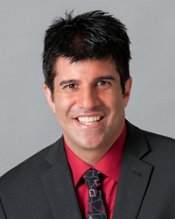
CEO, The Learning Consultants and Connecticut’s top private education consultant
full bio