
The Tutor-Mentor
By Daryl CapuanoGeneral Education AdviceI laughed recently when someone called me a sage. Isn’t that for old people? Oh…ha!
But the parent noted that her son would come home noticeably more peaceful after meeting with me. I have heard similar remarks when clients meet with other team members, notably Jean Card, Dr. Matthew Simpson and Dr. Kristina Knobelsdorff.
We are not just tutoring. We are mentoring. In the terribly impersonal digital world we live in, this has made a tangible difference in the lives of our students.
The more common remark came recently from a parent from East Lyme: you are like an Uncle to Charlotte.
When Charlotte first came to us, the concern seemed straightforward.
She was a capable high school junior from East Lyme—strong student, conscientious, well-liked—but her PSAT scores were weak and her confidence had begun to slip. This led to an anxiety spike.
But what Charlotte needed was not simply a tutor.
She needed a tutor-mentor.
I realize I have been doing this all my career but now there seems to be a more common name applied.
What Is a Tutor-Mentor?
A tutor-mentor operates at a different level.
Yes, we teach the material. But we also teach the student how to approach the material—and, more importantly, how to approach challenges.
With Charlotte, the work quickly expanded beyond math problems and reading passages.
We began to address:
- Performance psychology: How she responded to difficulty, pressure, and uncertainty
- Test strategy: How to “play the game” of the SAT rather than passively take it
- Self-awareness: Understanding her tendencies—where she rushed, where she hesitated
- Consistency: Building repeatable habits that produced reliable results
This is the difference between short-term improvement and long-term growth.
The Three Pillars: Content, Technique, Performance
At The Learning Consultants, we frame student development around three interconnected pillars:
1. Content
Students must know the material. This is the foundation—math concepts, grammar rules, reading comprehension.
2. Technique
Students must know how to apply the material efficiently. This includes pacing, pattern recognition, and strategic decision-making.
3. Performance
Students must be able to execute under real conditions. This is where many students falter—not because they lack ability, but because they lack composure and confidence.
Most tutoring focuses heavily on content. Some address technique. Very few systematically develop performance.
The tutor-mentor integrates all three.
Teaching Students to “Guess the Test”
One of the most powerful shifts for students like Charlotte is learning to anticipate the test rather than react to it.
We call this “Guess the Test.”
Instead of approaching each question as something entirely new, students learn to:
- Recognize patterns in question types
- Predict what the test is asking
- Narrow choices efficiently
- Avoid common traps
This transforms the experience from uncertainty to control.
For Charlotte, this was a turning point. The test no longer felt like something happening to her. It became something she could navigate.
From Anxiety to Agency
Before working with a tutor-mentor, Charlotte’s preparation looked familiar:
- Practice test → discouraging score
- More studying → inconsistent results
- Growing frustration and self-doubt
After shifting to a tutor-mentor model, her preparation became:
- Targeted practice based on identified gaps
- Strategic review of mistakes
- Repetition of high-value problem types
- Gradual improvement in both score and confidence
Her scores improved—but just as importantly, so did her mindset.
She began to trust her process.
Beyond the Test
While Charlotte initially came for SAT preparation, the benefits extended far beyond a single exam.
She developed:
- Greater independence in her academic work
- Improved time management
- A more resilient response to challenges
- A clearer sense of her own capabilities
These are not just test-taking skills. They are life skills.
I am writing a new book that will touch on some of these issues but one of the research points I’ve uncovered: students have almost no one in their lives -outside of their parents – that gives them advice. No village.
We can help.
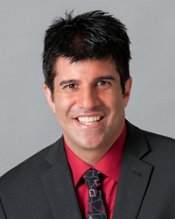
CEO, The Learning Consultants and Connecticut’s top private education consultant
full bio