College to Career: “Career Themes” are needed
By Daryl CapuanoGeneral Education AdviceFrom College to Career: Developing Career Themes Before Graduation
The Learning Consultants | College-to-Career Counseling in Connecticut
Many college students are not confused.
They are unfocused.
There is a difference.
Confusion suggests lack of intelligence or ability.
Unfocused students are often capable, high-achieving, and busy. But they lack a coherent career theme — a strategic through-line connecting their education, internships, and long-term direction.
In today’s economy — particularly with AI reshaping entry-level roles — clarity is no longer optional.
It is strategic.
An Old Lyme Story: Intelligent, Motivated — But Meandering
A student from Old Lyme, Connecticut came to us during his junior year of college. Strong grades. Business major. Multiple internships. Active socially. By most external measures, he was doing everything right.
But when I asked a simple question:
“What are you building toward?”
His answers sounded like this:
-
“Maybe consulting.”
-
“Maybe finance.”
-
“Something strategic.”
-
“I just want options.”
This is common among students from Old Lyme, East Lyme, Old Saybrook, Madison, Essex, and the broader Connecticut shoreline. They work hard. They check boxes. They accumulate credentials.
But they do not build thematic direction.
He was accumulating experiences — not constructing a trajectory.
What Is a Career Theme?
A career theme is not a job title.
It is the integration of:
-
A target industry
-
A defined skill stack
-
A long-term positioning strategy
Without this, students apply broadly and interview vaguely. Employers sense the lack of specificity.
Clarity signals maturity.
Step One: Define the Industry Ecosystem
Most students start with roles:
Investment banking. Product management. Consulting. Marketing.
That approach is backward.
We stepped back and asked:
-
What problems energize you?
-
What sectors do you naturally follow?
-
What case studies hold your attention?
-
What business conversations excite you?
Through structured dialogue, we identified a consistent pattern:
He was drawn to infrastructure, systems, logistics, and operational complexity.
Not branding.
Not pure finance.
Not abstract strategy.
He was interested in how large systems function efficiently.
That narrowed his focus to industries such as:
-
Supply chain and logistics
-
Advanced manufacturing
-
Operations-heavy organizations
Once that industry focus clarified, everything sharpened.
Step Two: Identify a Monetizable Skill
The next question:
If someone hires you in this industry, what skill are they paying for?
Many students cannot answer this.
We defined his core skill theme as:
Data-driven operational analysis.
That translated into concrete action:
-
Advanced Excel and modeling refinement
-
SQL coursework
-
Lean process training
-
Operations-focused internship targeting
-
Resume repositioning around efficiency outcomes
Instead of sounding like a “general business student,” he began presenting himself as:
A developing operations analyst focused on system optimization.
Interview performance changed immediately.
Because clarity builds confidence.
Why This Matters Now
Artificial intelligence is rapidly compressing generic entry-level roles. Students who present as broad, unfocused generalists will struggle.
Students with:
-
Industry focus
-
Specific technical competencies
-
Articulable value propositions
Will outperform.
The college-to-career transition is no longer about “finding something.”
It is about building strategic coherence before graduation.
College-to-Career Counseling in Connecticut
At The Learning Consultants, we serve families throughout:
-
Old Lyme
-
East Lyme
-
Old Saybrook
-
Madison
-
Essex
-
Guilford
-
The Connecticut shoreline
-
Greater New Haven and Fairfield County
Our work goes beyond college admissions.
We guide students through:
-
Career theme development
-
Industry mapping
-
Skill stack construction
-
Internship strategy
-
Resume narrative alignment
-
AI-era positioning
The goal is not premature specialization.
The goal is intelligent focus.
The Outcome
My Old Lyme student did not need more credentials.
He needed direction.
By senior year, his internships aligned. His interviews were precise. His confidence increased because he understood the story he was telling.
And that is the difference between drifting and building.
The Learning Consultants
College Admissions. Career Direction. Long-Term Strategy.
Serving Connecticut Families for Over 25 Years.
If your student is succeeding academically but lacks career clarity, the time to build a theme is now — not after graduation.
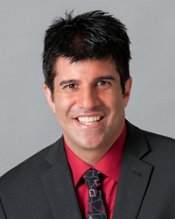
CEO, The Learning Consultants and Connecticut’s top private education consultant
full bio