Connecticut College Counseling: Higher in the Age of AI
By Daryl CapuanoGeneral Education AdvicePreparing High Schoolers for Higher Education in the Age of AI
Every admissions cycle at The Learning Consultants, I sit down with Connecticut high school students—and their understandably anxious parents—who are trying to map out a four-year college plan in an educational landscape shifting faster than ever. Generative AI has moved from a novelty into the classroom, disrupting how students learn, how colleges evaluate applicants, and how we must think about the true value of a bachelor’s degree.
During what I call “the launch decade”—that pivotal stretch running from high school through a student’s twenties—the college decision used to follow a predictable script: pick a “safe,” practical major, earn strong credentials, and step onto an established career conveyor belt. Today, parents and teenagers ask fundamentally different questions: Will this major be automated before graduation? How do colleges view AI tools in admissions essays? What should high schoolers actually study to build an enduring, disruption-proof foundation?
Navigating technological sea changes does not require abandoning the liberal arts or rushing blindly into every new tech fad; it requires strategic, intentional positioning. Higher education is evolving, and high schoolers need a modern playbook to make college the launchpad it was meant to be.
1. Moving Beyond Rote Learning to Intellectual Agility
For decades, high school rewarded students who excelled at memorization, standard formula regurgitation, and formulaic essay structures. AI handles those tasks instantly. As admissions committees adapt, colleges are placing less emphasis on mechanical execution and far more on higher-order inquiry: original analysis, interdisciplinary problem-solving, and independent thinking.
At The Learning Consultants, our college counseling approach focuses on helping students move beyond simple surface-level performance. When choosing coursework or developing capstone projects, high schoolers should seek out opportunities that demand authentic intellectual stamina: seminar discussions, rigorous research, debate, and creative synthesis. Colleges want thinkers who can evaluate information critically, ask sharp questions of data, and generate novel insights rather than replicate a textbook.
2. The Admissions Premium on Authentic Human Voice
With the widespread availability of generative writing tools, college admissions officers are seeing an influx of polished, generic personal statements that look technically competent but lack a soul. Consequently, authentic self-reflection and personal voice have never carried more weight.
Admissions readers are actively looking for the quirks, vulnerabilities, specific observations, and genuine life lessons that only a real person can convey. When we guide students through their applications, the goal is never to produce an algorithm-friendly essay. The goal is to articulate an authentic personal narrative that demonstrates maturity, self-awareness, and emotional intelligence—traits an algorithm cannot simulate.
3. Cross-Disciplinary Strength Over Hyper-Specialization
A common pitfall in modern college planning is the urge to hyper-specialize too early, pushing a sixteen-year-old down a rigid, narrow track out of fear that a broader education lacks utility. In reality, AI makes rigid specialization risky, while elevating the value of flexible, cross-disciplinary learners.
The strongest college applicants are often adaptable polymaths: students who pair quantitative literacy with philosophical depth, or computer science with ethics, writing, and government. Colleges are hungry for students who can bridge different academic departments. When advising students on potential majors, we emphasize building a versatile core curriculum that sharpens foundational human skills—rhetoric, logic, and ethical reasoning—alongside technical literacy.
4. Direct, Hands-On Experience and Physical Engagement
Colleges and future employers alike increasingly prioritize demonstrable, real-world engagement over passive credential collection. Extracurricular profiles padded with superficial club memberships are yielding diminishing returns.
Students stand out when they engage directly with the tangible world around them. Whether through community organizing, intensive athletics, hands-on scientific fieldwork, creative arts, or local entrepreneurship, tangible initiatives prove a student’s capacity to step outside the digital bubble and effect change in reality. This grounded, physical involvement signals resilience, leadership, and agency—the very qualities colleges want in their campus communities.
5. Developing Self-Regulation and the Mindset of a Lifelong Learner
The ultimate value of college in the twenty-first century is not the specific facts acquired in a lecture hall; it is mastering the discipline of learning how to learn. Because industries and tools will continue to pivot unpredictably, a student’s most vital asset is internal resilience.
Succeeding in college and the professional world beyond requires disciplined daily habits: focused reading, mental clarity, physical wellness, and intentional digital boundaries. Our college counseling philosophy centers on helping young people develop the self-regulation needed to manage academic freedom and intellectual pressure. When students cultivate a steady internal foundation in high school, they arrive on campus ready to capitalize on higher education, adapt to disruptive technologies, and take full ownership of their future.
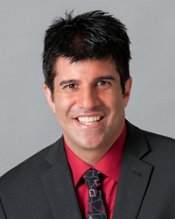
CEO, The Learning Consultants and Connecticut’s top private education consultant
full bio