High School to College… and Career Planning
By Daryl CapuanoGeneral Education AdviceCollege Planning and Career Planning Must Become One Process
Many families in Connecticut still approach college planning in isolation.
They concentrate on grades, standardized testing, extracurricular activities, application essays, and admissions strategy. These things matter. But gaining admission to college is not the ultimate objective.
College is an extraordinarily expensive and influential developmental experience. The real objective is to help a student create a foundation for a satisfying adult life.
This does not mean that every 17-year-old needs a fixed career plan. It means that college selection should include career-related questions:
What subjects does the student genuinely enjoy?
What abilities does the student possess?
What kinds of problems does the student like to solve?
Does the student prefer working with people, ideas, data, systems, or physical objects?
Which colleges provide strong programs in the student’s emerging areas of interest?
How easily can students change majors or combine different fields?
Does the college provide meaningful internships, research opportunities, career advising, alumni connections, and experiential learning?
What is the likely financial cost, and how does that cost relate to the student’s probable career path?
A student who is uncertain about a career may benefit from a college with broad academic flexibility. A student interested in engineering may need to enter a specific program directly because transferring into engineering later could be difficult. A future nursing student should understand clinical-placement opportunities and licensure results. A student interested in business should investigate internship access and employer recruiting rather than relying only on the name of the major.
College counseling should therefore be about more than admission.
At The Learning Consultants, we believe that the best college plan emerges from understanding the student. Admissions strategy matters, but it should serve the student’s larger educational and career development. A student should not spend four years merely accumulating credits and hoping that clarity will magically appear before graduation.
The End of the “Learn Once and Work Forever” Model
Perhaps the most important trend is not the elimination of particular occupations. It is the accelerating change in the skills required within those occupations.
LinkedIn’s Work Change Report estimates that by 2030, approximately 70 percent of the skills used in most jobs will change, with AI serving as a major catalyst. Young people entering the workforce are also expected to hold substantially more jobs during their careers than members of earlier generations.
Such projections should be viewed as directional rather than certain. Nevertheless, the underlying point is clear: Education will not end at college graduation.
Students will need to learn, unlearn, and relearn throughout their working lives.
This development should affect how Connecticut families evaluate colleges. A college should not simply transfer current technical information to a student. Much of that information may become outdated. A strong education should help the student learn how to think, communicate, analyze, adapt, and acquire new knowledge.
This is one reason the debate between liberal arts and practical education is often misguided.
Students need both.
They need the broad abilities traditionally associated with a strong liberal arts education: critical thinking, communication, historical perspective, ethical reasoning, and the ability to understand complex human problems.
They also need practical competence: technological fluency, quantitative reasoning, career knowledge, work experience, and an understanding of how organizations operate.
The best college education does not force students to choose between becoming thoughtful and becoming employable. It helps them become both.
Every Student Will Need Some Degree of AI Fluency
Not every young person should become a computer scientist. Every young person should become comfortable using technology.
AI fluency will increasingly resemble familiarity with the internet, spreadsheets, presentation software, and online research. A relatively small group of people will design the underlying systems. A much larger group will use those systems in healthcare, law, finance, education, engineering, government, media, sales, research, and entrepreneurship.
AI fluency does not merely mean knowing how to type a question into a chatbot.
Students should learn how to:
Use AI to begin research without treating it as a final authority.
Ask precise and thoughtful questions.
Recognize when an AI response may be incomplete, biased, or inaccurate.
Verify important information through reliable sources.
Use AI to organize ideas without surrendering their own thinking.
Protect private, proprietary, and confidential information.
Combine AI-generated work with human judgment and subject-matter knowledge.
Understand the ethical implications of using artificial intelligence.
A student who allows AI to do all of his thinking may become intellectually weaker. A student who refuses to use AI may become less productive than his peers.
The objective is to use AI as a tool for increasing capability.
A biology student who understands statistics, scientific research, and AI-assisted analysis will have more options than a student who studies biology in isolation. A communications major who understands audience development, analytics, automation, and digital strategy will be more valuable than one who simply knows how to create conventional written content. A business student who can use AI to analyze markets, improve operations, and test ideas may eventually be able to build a company with fewer resources.
The goal is not to worship technology. The goal is to use it wisely.
Human Abilities Will Become More Important
As artificial intelligence makes average intellectual output easier to produce, distinctly human abilities may become more valuable.
AI can produce an acceptable first draft. It can summarize a report. It can suggest marketing language. It can create a basic presentation. It can analyze a large amount of information quickly.
But producing information is not the same as exercising judgment.
The human abilities that may become increasingly valuable include:
Judgment
Empathy
Leadership
Persuasion
Ethical reasoning
Curiosity
Creativity
Taste
Courage
Relationship-building
The ability to define the correct problem
Consider professions such as teaching, counseling, healthcare, management, sales, law, and consulting. Each will use more artificial intelligence. But the professional’s value often rests on something beyond the delivery of information.
Does the patient trust the physician?
Can the counselor understand what the client is afraid to say?
Can the teacher determine why the student is not learning?
Can the manager motivate a discouraged employee?
Can the salesperson understand the customer’s actual concern?
Can the lawyer recognize that a technically correct strategy may still be unwise?
AI may assist in each situation. It cannot fully replace the human relationship, contextual judgment, or responsibility involved.
These qualities are sometimes called “soft skills.” That term understates their importance. Communication, leadership, judgment, and interpersonal ability are difficult skills with significant economic value.
Students who are not naturally technical should find this reassuring. They still need technological literacy. But the future does not belong only to coders. It will also belong to people who understand other people, communicate clearly, make sound decisions, and bring order to complicated situations.
Promising Career Areas Extend Beyond Computer Science
Careers connected directly to artificial intelligence, data, and cybersecurity offer real opportunities.
The U.S. Bureau of Labor Statistics projects strong growth through 2034 for data scientists, information security analysts, actuaries, operations research analysts, computer and information research scientists, and software developers.
But students and parents should be careful when interpreting lists of rapidly growing occupations.
A high growth percentage does not mean that a career is suitable for every student. A relatively small field can grow rapidly while producing fewer total opportunities than a much larger field. Promising occupations can also become highly competitive when large numbers of students pursue the same majors.
Most importantly, career fit matters.
A student who dislikes sustained mathematical and technical problem-solving should not major in data science merely because it appears on a list of growing careers. A student will not become successful simply by selecting a supposedly lucrative major. The student must possess—or be willing to develop—the necessary abilities.
Healthcare is another major area of projected growth. The Bureau of Labor Statistics expects healthcare and social assistance to add roughly two million jobs between 2024 and 2034. Nurse practitioners, physician assistants, medical and health services managers, mental-health professionals, and various technical and therapeutic occupations are expected to experience strong demand.
Healthcare is not immune from AI. Artificial intelligence will increasingly help with diagnosis, documentation, research, scheduling, and patient monitoring. But many healthcare roles combine growing social demand with physical presence, licensed judgment, human reassurance, and personal responsibility.
Skilled trades and hands-on technical careers also deserve more attention.
Electricians, HVAC specialists, advanced manufacturing technicians, medical-equipment technicians, and renewable-energy workers perform tasks in physical environments that are difficult to automate completely. These careers can provide meaningful work, strong income, and opportunities for business ownership without always requiring a traditional four-year degree.
Connecticut families sometimes assume that every capable student should attend a four-year residential college. For many students, that will remain the right choice. For others, a technical credential, apprenticeship, associate degree, or carefully selected certification may provide a more direct and affordable path.
The objective should not be to follow one cultural definition of success. It should be to identify the path that best fits the student.
Entry-Level White-Collar Work Is Becoming More Competitive
One of the most significant concerns for current students is AI’s effect on entry-level professional work.
Historically, junior employees learned by conducting basic research, preparing reports, organizing information, drafting routine communications, and creating preliminary versions of work for senior employees to review.
Generative AI can already accelerate many of these tasks.
That does not mean companies will stop hiring young people. Organizations still need to develop future professionals, managers, creators, relationship-builders, and leaders. But employers may need fewer people to perform routine cognitive work. They may also expect entry-level employees to contribute at a higher level sooner.
This makes experience during high school and college more important.
The student who graduates with only a degree and a transcript may struggle to distinguish himself from thousands of other applicants. Another student may graduate with internships, a portfolio, faculty recommendations, research experience, technological competence, and examples of real problems she has solved.
The second student possesses evidence of value.
This is why students should not view summers as empty spaces between academic years. A summer can be used for:
An internship
A part-time job
Job shadowing
Volunteer service
Independent research
A substantive project
An entrepreneurial experiment
A professional certification
An informational interview with someone in a field of interest
Not every experience needs to be prestigious. A conventional summer job can teach reliability, communication, customer service, and responsibility. A small project can demonstrate initiative. A conversation with a professional can prevent a student from spending years preparing for a career he does not actually understand.
In the age of AI, students must be able to show not only what they know, but what they can do.
The College Major Still Matters—but It Is Not Enough
Parents frequently ask which major will guarantee employment.
No major can provide such a guarantee.
Some majors lead more directly to specific occupations. Nursing, accounting, engineering, computer science, and several allied-health fields have relatively clear connections to the job market.
Other majors provide broad intellectual development and require students to build a more deliberate bridge to employment.
Majoring in history, psychology, English, political science, sociology, or communications is not necessarily a bad decision. But “I will figure it out after graduation” is becoming a dangerous strategy.
Students in broad academic majors should add complementary skills and experiences.
A psychology major could add statistics, research methods, business courses, and internships connected to behavioral health, human resources, organizational development, market research, or user experience.
An English major could build expertise in digital communications, grant writing, public relations, content strategy, technical writing, or publishing while learning how AI is changing each field.
A political science major could develop skills in data analysis, policy research, compliance, government operations, advocacy, or public administration.
An economics student might combine economic reasoning with statistics, programming, finance, public policy, or business analytics.
The relevant question is not merely, “What is your major?”
The better questions are:
What can you do?
What problems can you solve?
What technology can you use?
What experience do you have?
What do you understand that other applicants may not?
How will your combination of abilities help an employer, client, or community?
A major is one component of a student’s professional identity. It is not the entire identity.
Students Need a Skill Stack
In the past, possessing one scarce technical skill could sometimes sustain an entire career. Today, combinations of abilities may be more valuable.
A person who understands finance is useful. A person who understands finance, communicates well, analyzes data, and uses AI intelligently may be unusually useful.
A person who understands biology is useful. A person who combines biology with statistics, regulatory knowledge, and scientific communication may have many more options.
A person who writes well is useful. A person who can write, interview experts, understand an audience, evaluate AI-generated material, and develop communication strategy offers something more difficult to replace.
I call this building a skill stack.
The objective is not to become world-class in ten unrelated areas. It is to develop a valuable and relatively uncommon combination of abilities that fits the individual student.
For most students, the skill stack should include six broad areas:
- Communication
Writing, speaking, listening, presenting, and persuading.
- Analytical ability
Interpreting evidence, working with numbers, identifying patterns, and making sound decisions.
- AI and technological fluency
Using modern tools productively while understanding their limitations.
- Interpersonal ability
Collaborating, understanding people, managing conflict, and building trust.
- Execution
Organizing work, meeting deadlines, paying attention to detail, and finishing what one starts.
- Domain expertise
Developing substantive knowledge in a field such as healthcare, finance, education, engineering, policy, logistics, science, law, or business.
AI knowledge without subject-matter expertise can produce confident nonsense. Subject-matter expertise without technological fluency can lead to declining productivity. Interpersonal ability without execution can create likability without results.
The strongest young professionals will combine knowledge, technology, human ability, and character.
College Selection Must Begin With Self-Knowledge
Rankings, reputation, and career projections all matter to some degree. But no college list or labor-market report can determine what a particular student should do.
Two students can examine the same profession and reasonably reach opposite conclusions.
One student may thrive in engineering because she enjoys precision, systems, and difficult technical problems. Another may find the work draining. One student may love the immediacy and human significance of nursing. Another may find the physical and emotional demands overwhelming. One student may be energized by sales and relationship-building. Another may dislike the uncertainty and constant interpersonal interaction.
Sound college and career planning should examine several forms of fit:
Interest: What naturally holds the student’s attention?
Ability: What can the student do well—or realistically learn to do well?
Personality: What kinds of environments and interactions produce energy rather than chronic depletion?
Values: Does the student prioritize security, autonomy, status, creativity, service, income, flexibility, or some combination?
Lifestyle: What does the profession require in terms of hours, location, education, travel, stress, and responsibility?
Opportunity: Is there sufficient demand, and what must the student do to become competitive?
Financial reality: What will the education cost, and is that cost reasonable in relation to the likely outcome?
No personality or career assessment can mechanically identify the one correct profession. Assessments can provide language, reveal patterns, and generate promising possibilities. The deeper work involves connecting those results to the student’s actual experiences, motivation, performance, and opportunities.
This is why individualized college counseling matters. A generic list of “best colleges” or “best careers” cannot determine the right path for a particular student.
Parents Should Encourage Direction Without Demanding Certainty
Parents face a difficult challenge.
They understand that college is expensive and that the employment market is changing. They want their children to make good choices. They may become frustrated when a student responds to important questions with, “I don’t know.”
That concern is understandable. But demanding premature certainty can make the problem worse.
A 17-year-old does not need to know precisely what he will do at age 40. He should, however, begin developing direction.
There is an enormous difference between healthy exploration and passive drifting.
Healthy exploration is active. The student investigates occupations, speaks with professionals, takes relevant courses, visits appropriate colleges, pursues internships, and pays attention to what produces interest and competence.
Drifting is passive. The student chooses a college because friends are going there, selects a major because it sounds impressive, and assumes that everything will somehow work out after graduation.
Parents can help by asking thoughtful questions:
What kinds of problems do you enjoy solving?
Which subjects or activities make you feel most capable?
Do you prefer working with people, ideas, data, systems, or physical things?
What kind of working day can you imagine enjoying?
What are you willing to practice long enough to become excellent?
What evidence do you have that you understand this field?
Which colleges would allow you to explore this interest seriously?
What experience could you pursue during the next six months to test your interest?
The goal is not to conduct an interrogation at the dinner table. It is to help the student move from vague preferences toward informed action.
A Better Framework for College and Career Planning
The world of AI requires a new balance.
Students need enough direction to make purposeful choices. They need enough experimentation to determine what fits. They need enough adaptability to revise the plan as technology, opportunity, and self-understanding change.
The following framework is more realistic than searching for one permanently safe career.
- Understand the student.
Examine the student’s interests, abilities, personality, values, motivation, and preferred working environment.
- Identify promising directions.
Develop two or three possible academic and career areas rather than demanding one permanent answer.
- Investigate the actual work.
Read job descriptions. Study career paths. Speak with professionals. Ask what they do all day, how their field is changing, what they enjoy, what they dislike, and what they would advise a young person to learn now.
- Build the college list with those directions in mind.
Consider academic programs, flexibility, internships, career services, alumni networks, research, location, affordability, and graduate outcomes.
- Test interests through experience.
Take a course. Shadow someone. Volunteer. Find a job. Complete a project. Pursue an internship. The experience does not have to be perfect. Its purpose is to generate knowledge and capability.
- Build a valuable skill stack.
Combine communication, analytical ability, technological fluency, interpersonal strength, execution, and domain expertise.
- Learn to use AI responsibly.
Use artificial intelligence for research, brainstorming, practice, organization, and analysis. Verify its output. Do not surrender independent thinking to it.
- Review and adjust.
Every six or twelve months, ask: What have I learned about myself? What is changing in the field? What abilities am I building? What should I do next?
This is college and career planning as an active process rather than a one-time declaration.
The Best Protection Is Becoming Genuinely Useful
There is no way to eliminate uncertainty from the future of work.
AI will improve. Some occupations will shrink. New careers will emerge. Existing professions will reorganize. College majors will change. Credentials that once guaranteed an interview may lose some of their power.
But the fundamental principles of career success are not disappearing.
Organizations and communities will continue to need people who can solve important problems, learn quickly, communicate clearly, exercise judgment, work with others, and produce results.
Technology changes how these abilities are expressed. It does not eliminate their value.
My best advice to students is neither “ignore AI” nor “build your entire identity around AI.”
Learn it. Use it. Understand how it is changing the fields you are considering. Then develop the human and professional abilities that allow you to do what a machine cannot accomplish alone.
The objective is not to select a college major or career that will never change. Such a career probably does not exist.
The objective is to become the kind of person who can continue to create value as careers change.
That is a more demanding goal than finding a safe job title. It is also a more hopeful one.
At The Learning Consultants, we help Connecticut students and families connect college admissions with the larger process of preparing for adult success. This includes understanding the student, exploring possible majors and careers, developing a thoughtful college list, strengthening the student’s candidacy, and creating a plan for using the college years productively.
Gaining admission to college remains important. But admission is a beginning, not a destination.
In a changing world, students do not need perfect predictions about the future. They need self-knowledge, purposeful direction, practical experience, and the willingness to adapt.
Those qualities have always mattered.
In the age of artificial intelligence, they will matter even more.
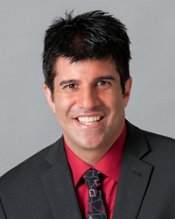
CEO, The Learning Consultants and Connecticut’s top private education consultant
full bio